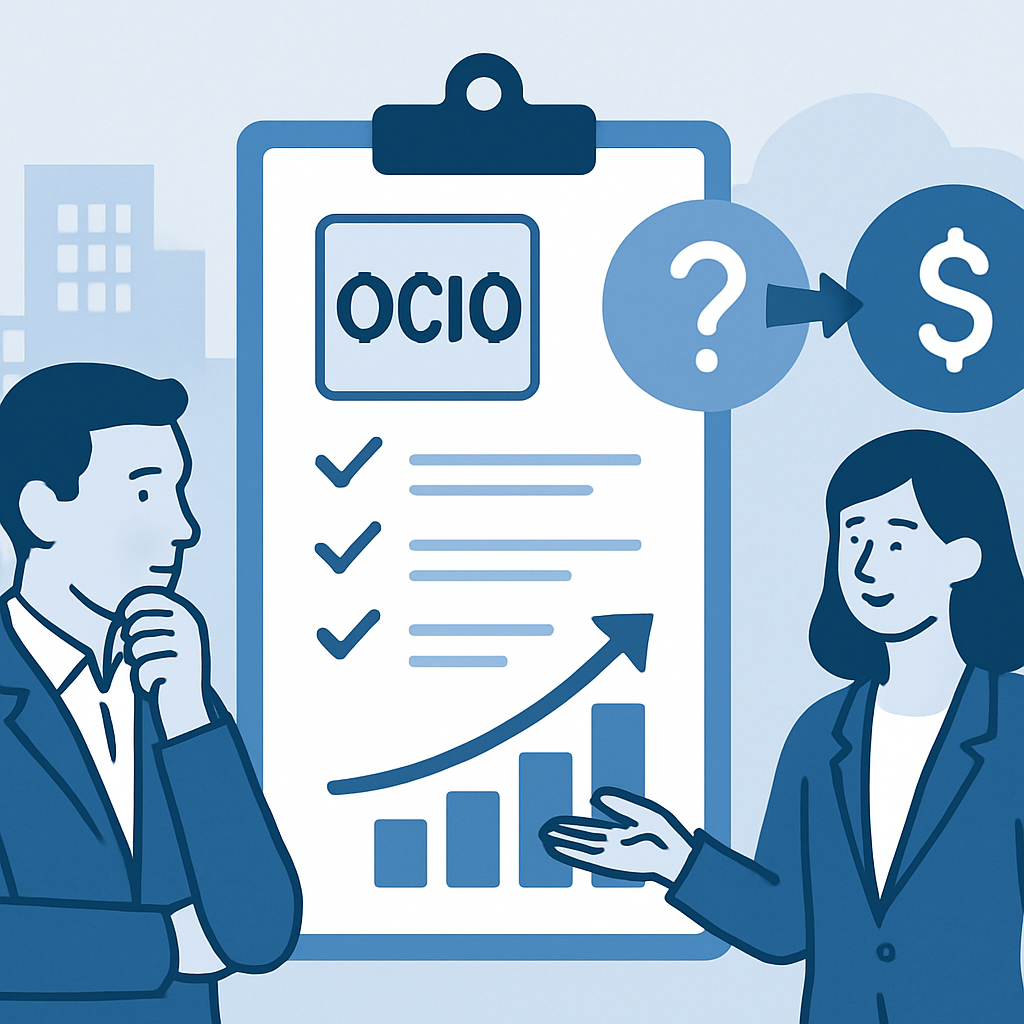
Outsourced chief investment officer services are one of the most important topics for US investors in 2026. Many foundations, endowments, pension funds, and family offices struggle to build and maintain the in-house expertise needed to manage complex investment portfolios effectively. An outsourced chief investment officer provides institutional-grade investment management without the overhead costs of hiring a full-time internal team, making sophisticated portfolio oversight accessible to organizations of all sizes.
The OCIO industry has grown dramatically over the past decade, with assets under management exceeding $2 trillion as of 2025. Organizations increasingly recognize that delegating investment responsibilities to specialized firms allows them to focus on their core missions while benefiting from professional portfolio management. This trend continues to accelerate as investment markets become more complex and regulatory requirements expand, making the outsourced chief investment officer model more attractive than ever for institutions seeking cost-effective expertise.
What Is Outsourced Chief Investment Officer?
An outsourced chief investment officer is a third-party firm or individual that assumes full or partial responsibility for managing an institution’s investment portfolio, replacing or supplementing internal investment staff. The OCIO takes on duties traditionally handled by an in-house chief investment officer, including asset allocation, manager selection, performance monitoring, risk management, and reporting to the board or investment committee. This arrangement allows organizations to access institutional-quality investment management without the expense of maintaining a full internal investment department.
For example, a university endowment with $150 million in assets might hire an outsourced chief investment officer instead of employing a full-time CIO and supporting staff. The OCIO firm would develop the investment policy, construct a diversified portfolio across public and private markets, conduct due diligence on investment managers, monitor performance, and provide quarterly reports to the university’s investment committee. This arrangement typically costs significantly less than maintaining internal staff while providing access to a broader range of investment opportunities and deeper expertise across multiple asset classes.
Why Outsourced Chief Investment Officer Matters for US Investors in 2026
The demand for outsourced chief investment officer services has increased by approximately 15% annually over the past five years, driven by growing portfolio complexity and rising compliance costs. Organizations with assets between $50 million and $500 million find the OCIO model particularly valuable, as they need sophisticated investment strategies but cannot justify the $500,000 to $2 million annual cost of a full internal investment team. The average OCIO fee structure ranges from 0.35% to 0.85% of assets under management, making professional oversight accessible at a fraction of traditional costs.
- Cost Efficiency: An outsourced chief investment officer eliminates the need for salaries, benefits, office space, and technology infrastructure required for internal staff, typically reducing total investment management costs by 40-60%. Organizations redirect these savings toward their mission-critical activities while maintaining professional investment oversight.
- Access to Institutional Opportunities: OCIO firms aggregate assets from multiple clients, giving even smaller institutions access to top-tier private equity, hedge funds, and alternative investments typically reserved for billion-dollar portfolios. This access can enhance returns by 100-200 basis points annually compared to public-market-only strategies.
- Reduced Governance Burden: Investment committees often comprise volunteers with limited time and investment expertise, making detailed portfolio oversight challenging. An outsourced chief investment officer handles day-to-day management decisions, allowing committees to focus on strategic policy rather than operational details.
- Objectivity and Best Practices: External providers bring unbiased perspectives free from internal politics and implement proven processes across multiple clients. This professional discipline helps organizations avoid common pitfalls like performance chasing, inadequate diversification, and inconsistent manager monitoring.
How to Get Started with Outsourced Chief Investment Officer: Step-by-Step
Implementing an outsourced chief investment officer relationship requires careful planning and due diligence to ensure the arrangement serves your organization’s specific needs and objectives.
- Step 1: Assess Your Organization’s Needs: Evaluate your current investment management capabilities, portfolio size, return objectives, risk tolerance, and available internal resources. Document whether you need full discretionary management or consultative support to complement existing staff, as this determines which OCIO model best fits your situation.
- Step 2: Research and Screen Potential Providers: Identify OCIO firms with experience serving organizations similar to yours in size, mission, and investment philosophy. Request their Form ADV from the SEC database, review their fee structures, check references from current clients, and verify they have the expertise in asset classes relevant to your portfolio strategy.
- Step 3: Conduct Interviews and Due Diligence: Meet with at least three finalist firms to discuss their investment philosophy, team structure, client service approach, and reporting capabilities. Ask detailed questions about their manager selection process, risk management framework, fee transparency, and how they would handle your specific portfolio challenges.
- Step 4: Negotiate Terms and Implement the Transition: Review the investment management agreement carefully, ensuring clarity on discretionary authority, fee calculations, performance benchmarks, and termination provisions. Work with the selected outsourced chief investment officer to develop an implementation timeline, transfer custodial relationships, and establish reporting protocols that meet your board’s governance requirements.
Outsourced Chief Investment Officer: Common Mistakes to Avoid
Many organizations encounter challenges when engaging an outsourced chief investment officer due to unrealistic expectations, inadequate due diligence, or misaligned governance structures.
- Mistake 1: Choosing Based Solely on Lowest Fees: While cost efficiency matters, selecting an OCIO provider primarily on price often results in inadequate service, limited investment options, or hidden costs through revenue sharing arrangements. The cheapest option may lack the expertise, manager access, or resources needed to achieve your investment objectives, ultimately costing more through underperformance.
- Mistake 2: Maintaining Excessive Committee Control: Some organizations hire an outsourced chief investment officer but continue requiring committee approval for routine decisions like rebalancing or tactical adjustments. This approach negates the efficiency benefits of delegation and prevents the OCIO from responding quickly to market opportunities or risks.
- Mistake 3: Neglecting Cultural Fit Assessment: Technical investment capabilities matter, but so does alignment between the OCIO’s communication style and your organization’s culture. A mismatch in communication frequency, reporting detail, or responsiveness creates frustration and undermines the partnership’s effectiveness regardless of investment performance.
Taking time to properly structure the relationship and maintain appropriate oversight without micromanagement maximizes the value an OCIO partnership delivers. Clear communication about expectations, decision-making authority, and performance evaluation criteria from the outset prevents misunderstandings and builds a productive long-term relationship.
For more information, visit Investopedia or the official SEC website.
Frequently Asked Questions About Outsourced Chief Investment Officer
What is outsourced chief investment officer and how does it work?
An outsourced chief investment officer is a specialized firm that manages an institution’s investment portfolio on a discretionary or consultative basis, handling responsibilities like asset allocation, manager selection, and performance monitoring. The OCIO works within the investment policy established by the organization’s board or investment committee, making day-to-day investment decisions and providing regular reporting. This arrangement allows organizations to access professional investment management expertise without hiring full-time internal staff.
Is outsourced chief investment officer a good option for beginners?
The OCIO model is generally designed for institutional investors rather than individual retail investors or beginners. Organizations like foundations, endowments, pension plans, healthcare systems, and family offices with at least $25-50 million in investable assets typically benefit most from this service. Individual investors seeking professional management should explore options like financial advisors, wealth managers, or robo-advisors better suited to personal investment needs.
How much money do I need to start with outsourced chief investment officer?
Most OCIO providers have minimum asset requirements ranging from $25 million to $100 million, though some firms serve smaller organizations starting at $10 million. The minimum depends on the provider’s business model and service offering, with larger minimums typically associated with more customized portfolios and broader alternative investment access. Organizations below these thresholds might consider traditional investment consultants or multi-client pooled funds as stepping stones toward eventual OCIO relationships.
What are the risks of outsourced chief investment officer?
The primary risks include potential underperformance relative to benchmarks, concentration of decision-making authority with an external party, and possible misalignment between the OCIO’s investment approach and the organization’s values or objectives. Organizations also face transition risk when changing providers, as portfolio repositioning may trigger taxes or transaction costs. Proper due diligence, clear contractual terms, and ongoing performance monitoring help mitigate these risks while preserving the delegation benefits.
Conclusion: Is Outsourced Chief Investment Officer Right for You?
The outsourced chief investment officer model offers compelling advantages for institutions seeking professional investment management without the overhead of internal staff, particularly those with assets between $50 million and $500 million. By providing access to institutional-quality strategies, reducing governance burdens, and delivering cost-efficient expertise, OCIOs help organizations achieve their financial objectives while focusing resources on their core missions. However, success requires careful provider selection, appropriate governance structures, and realistic performance expectations aligned with your organization’s specific circumstances and risk tolerance.
If you are ready to take the next step with outsourced chief investment officer services, start your investment journey today and build the financial future you deserve.