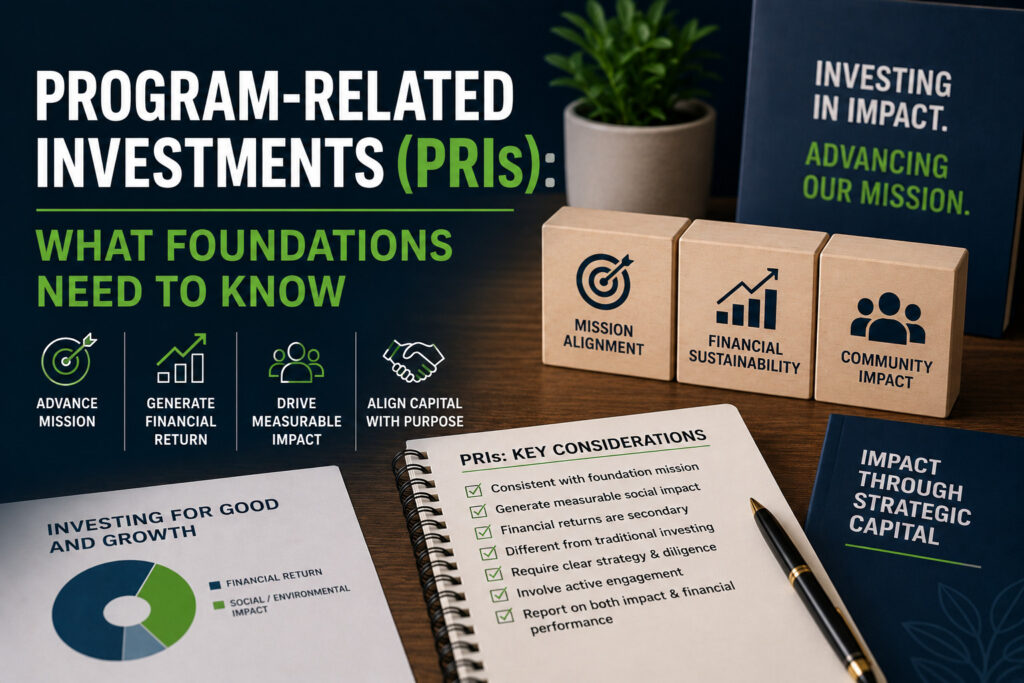
Program-related investment is one of the most important topics for US investors in 2026. Private foundations seeking to maximize their impact while meeting IRS distribution requirements face a unique challenge: how to support charitable activities beyond traditional grantmaking. Program-related investments offer a powerful solution that allows foundations to invest capital in mission-aligned projects that generate both social impact and financial returns.
According to recent IRS data, private foundations must distribute approximately 5% of their assets annually to maintain tax-exempt status. While most foundations meet this requirement through grants, program-related investments count toward this mandatory payout while potentially returning capital for future use. The Foundation Center estimates that PRIs represent less than 1% of foundation giving, meaning this strategy remains significantly underutilized despite offering substantial benefits for both foundations and the communities they serve.
What Is Program-Related Investment?
A program-related investment is an investment made by a private foundation where the primary purpose is to accomplish charitable objectives rather than produce income or appreciation of property. The IRS defines PRIs under Section 4944(c) of the Internal Revenue Code as investments that would not have been made except for their relationship to the foundation’s exempt purposes. These investments must have charitable intent as the primary motivation, with any potential financial return being incidental to the charitable purpose.
For example, a foundation focused on affordable housing might provide a below-market loan to a nonprofit developer building low-income apartments. The loan terms might include a 2% interest rate when market rates are 7%, making it unattractive as a purely financial investment. However, because the primary purpose is advancing the foundation’s housing mission, it qualifies as a program-related investment and counts toward the foundation’s 5% distribution requirement.
Why Program-Related Investment Matters for US Investors in 2026
The landscape for foundation investing has shifted dramatically as foundations seek greater impact from every dollar. Program-related investments have grown by approximately 15% annually over the past five years, with total PRI capital exceeding $3.5 billion in 2025. Foundations are discovering that PRIs offer unique advantages that traditional grantmaking cannot match, particularly in sectors requiring catalytic capital that can be recycled and redeployed.
- Fulfills Distribution Requirements: Program-related investments count toward the IRS-mandated 5% annual distribution requirement, allowing foundations to meet compliance obligations while deploying capital that may eventually return. This recycling of capital means foundations can potentially support more charitable work over time compared to one-time grants.
- Leverages Foundation Assets: PRIs enable foundations to use their full asset base for mission advancement, not just the 5% distributed annually. By making investments that align with charitable purposes, foundations can deploy significantly more capital toward their goals while maintaining financial sustainability.
- Creates Sustainable Solutions: Unlike grants that provide one-time funding, program-related investments often support revenue-generating activities that become self-sustaining. This approach helps nonprofits and social enterprises build long-term capacity rather than depending on continuous charitable support.
- Attracts Additional Capital: Foundation PRIs frequently serve as catalytic capital that attracts other investors who might otherwise view projects as too risky. When a respected foundation makes a program-related investment, it signals credibility and can unlock multiple dollars of additional funding for every foundation dollar invested.
How to Get Started with Program-Related Investment: Step-by-Step
Implementing a program-related investment strategy requires careful planning and adherence to IRS guidelines to ensure investments qualify under tax regulations.
- Step 1: Review Your Foundation’s Mission: Identify specific charitable purposes outlined in your foundation’s governing documents and determine which social or environmental problems could be addressed through investment rather than grantmaking. Your program-related investment must directly further these stated exempt purposes, so clarity on mission is essential before proceeding.
- Step 2: Develop PRI Guidelines and Policies: Create written policies that define your foundation’s PRI objectives, risk tolerance, investment structures (loans, equity, guarantees), and approval processes. These policies should include criteria for evaluating whether proposed investments meet the IRS three-part test: primary purpose is charitable, production of income is not a significant purpose, and no prohibited political purpose exists.
- Step 3: Identify Potential Investment Opportunities: Research organizations and projects aligned with your mission that need flexible capital unavailable from traditional sources. Strong candidates often include nonprofit enterprises, community development financial institutions, affordable housing projects, microfinance initiatives, or social enterprises serving disadvantaged populations.
- Step 4: Conduct Due Diligence and Structure the Investment: Evaluate each opportunity’s financial viability, organizational capacity, and charitable impact using both investment analysis and program assessment. Work with legal counsel to structure the investment with terms that reflect its charitable purpose, such as below-market interest rates or flexible repayment schedules, and document why the investment would not be made but for its charitable purpose.
Program-Related Investment: Common Mistakes to Avoid
Foundations new to program-related investment often make errors that can jeopardize the investment’s status or expose the foundation to unnecessary risks.
- Mistake 1: Prioritizing Financial Returns Over Charitable Purpose: The most critical error is structuring a program-related investment with terms similar to market-rate investments, which signals that financial returns are a significant purpose. If the IRS determines financial return was a significant purpose rather than charitable impact, the investment may not qualify as a PRI and could be subject to excise taxes.
- Mistake 2: Inadequate Documentation of Charitable Purpose: Foundations must maintain thorough documentation explaining how each investment furthers specific exempt purposes and why it would not be made but for the charitable relationship. Without contemporaneous written records detailing the charitable rationale, the IRS may challenge the investment’s qualification during an audit.
- Mistake 3: Failing to Monitor Investment Performance: Some foundations make program-related investments and then provide insufficient oversight of both financial performance and charitable outcomes. Proper stewardship requires ongoing monitoring to ensure the investment continues serving its charitable purpose and to identify when intervention or restructuring might be necessary.
Working with experienced legal and financial advisors familiar with PRI regulations significantly reduces these risks and helps ensure your investments achieve both compliance and impact objectives. Many foundations also join PRI networks to learn from peers and access deal flow.
For more information, visit Investopedia or the official IRS website.
Frequently Asked Questions About Program-Related Investment
What is program-related investment and how does it work?
A program-related investment is an investment made by a private foundation primarily to accomplish charitable purposes rather than to produce income, and it counts toward the foundation’s mandatory 5% annual distribution requirement. The investment typically takes the form of below-market loans, loan guarantees, or equity investments in organizations or projects that advance the foundation’s exempt purposes. Unlike traditional investments focused on maximizing returns, program-related investments intentionally accept below-market financial terms because the charitable impact is the primary objective.
Is program-related investment a good option for beginners?
Foundations new to impact investing can successfully implement PRIs, but should start with simpler structures like loans to established nonprofits rather than complex equity investments. Many foundations begin by partnering with intermediaries like community development financial institutions that have expertise structuring and managing these investments. Starting small with one or two pilot investments allows foundation staff to develop expertise before scaling up their PRI portfolio.
How much money do I need to start with program-related investment?
PRIs can range from as little as $25,000 to millions of dollars, depending on the project and foundation size. Many foundations make their first program-related investment in the $50,000 to $250,000 range to test the approach without overextending resources. The minimum investment size depends more on the administrative capacity to conduct due diligence and monitoring than on any regulatory threshold.
What are the risks of program-related investment?
The primary risks include potential financial loss if borrowers cannot repay loans or enterprises fail, though this is acceptable since charitable purpose is primary. Compliance risk exists if the IRS determines an investment was made primarily for financial return rather than charitable purpose, potentially resulting in excise taxes. Reputational risk may also arise if an investment causes controversy or fails to achieve intended social outcomes, making thorough due diligence essential.
Conclusion: Is Program-Related Investment Right for You?
A program-related investment offers private foundations a powerful tool to extend their charitable impact beyond traditional grantmaking while meeting IRS distribution requirements. By deploying capital that may be repaid and recycled, foundations can potentially support more charitable activity over time and help build sustainable solutions to social problems. The strategy works best for foundations willing to develop new expertise, accept administrative complexity, and prioritize mission alignment over financial returns.
If you are ready to take the next step with program-related investment, start your investment journey today and build the financial future you deserve.